
↗️↘️Will the stock market crash in 2024? It's best for you either way.
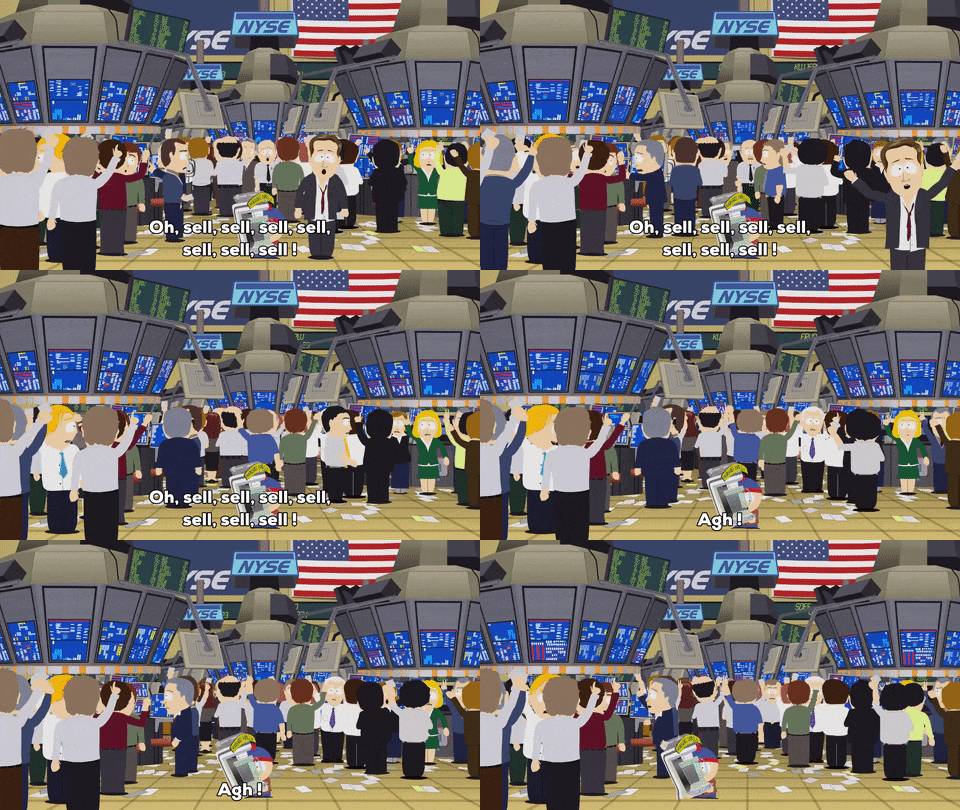
The Stock market is going to crash and that’s the fear everybody keeps hearing. It makes the headlines and it can even scare the seasoned investors. But STOP. There is nothing to fear. Don’t panic and sell your stocks, let’s look at it from the historical perspective and understand why it could potentially be the best opportunity to make even more money.
💡 Quick Summary : 2024–2026 Market Outlook
Are you worried about a market crash? Don’t be. While headlines in 2026 point to sticky inflation and high oil prices, history tells a different story. Here is what every DIY investor needs to know right now:
- The Resilience Factor: Despite the “scare” of 2024, the S&P 500 has continued to climb, proving that the market “climbs a wall of worry” even in uncertain times.
- Crashes = Opportunities: Historical data from 1929, 1987, and 2000 shows that every major dip is followed by a “vengeance” rally. To a savvy investor, a crash is just the stock market going on sale.
- The 2026 Strategy: Focus on Dollar-Cost Averaging (DCA) and diversification. While AI and tech are cooling off, other sectors are beginning to shine.
- The Bottom Line: You can’t predict the market, but you can control your reaction. Stay calm, stay invested, and let time do the heavy lifting.
 Update: 2026—Climbing the Wall of Worry
It’s May 2026, and if you look at the headlines, you’d think the sky was falling—again. Two years ago, the “big fear” was a 2024 crash that never quite materialized the way the doomsayers predicted. Instead, we’ve watched the market do what it does best: climb a wall of worry.
If you are looking at your portfolio today, here is the 2026 reality check you need to stay grounded.
The “New” Fears of 2026
Every cycle has its monsters. In 2024, it was interest rate uncertainty; today, we are staring down:
- The Energy Spike: With Middle East tensions pushing oil toward $107/barrel, inflation jitters have returned to the front page.
- The AI “Reality Check”: After the massive rallies of ’24 and ’25, we’re seeing a cooling period in tech as the market distinguishes between AI “hype” and actual AI “earnings.”
- Sticky Inflation: April’s CPI report showed inflation hitting its highest level in three years, leading to “higher for longer” talk from the Fed.
Why You Shouldn’t Panic
Despite these headlines, let’s look at the scoreboard. As of May 12, 2026:
- S&P 500: Hovering near 7,400.
- Dow Jones: Touching 49,760.
- Nasdaq: Strong at 26,088.
The market survived a 19% dip in early 2025 and still managed to end that year up nearly 18%. This is the “vengeance” I talked about earlier—the market doesn’t wait for the news to be good to start moving up; it moves up because it anticipates a better tomorrow.
Your 2026 Strategy
The game plan hasn’t changed, but your focus should:
- Look Beyond Tech: 2026 is the year of “broadening out.” While tech takes a breather, other sectors are finally getting their time in the sun.
- Ignore the “Oil Noise”: Energy prices fluctuate, but quality companies adapt.
- Stay the Course: If you’ve been dollar-cost averaging since 2024, you’ve already seen significant growth. Don’t let a few “sticky” inflation reports scare you out of the next leg up.
“The market is always climbing a wall of worry. The headlines provide the bricks; your patience provides the ladder.”
What history shows: The Market Always Bounces Back
Here is the truth that can comfort you all: the stock market, even though it can be volatile, has always bounced back and showed us that it will have an upward trend in the long term.
Consider this: Since the Dow Jones Industrial Average’s inception in 1896, it has experienced 27 bear markets (periods of decline of 20% or more). Yet, it has always recovered, reaching new highs.
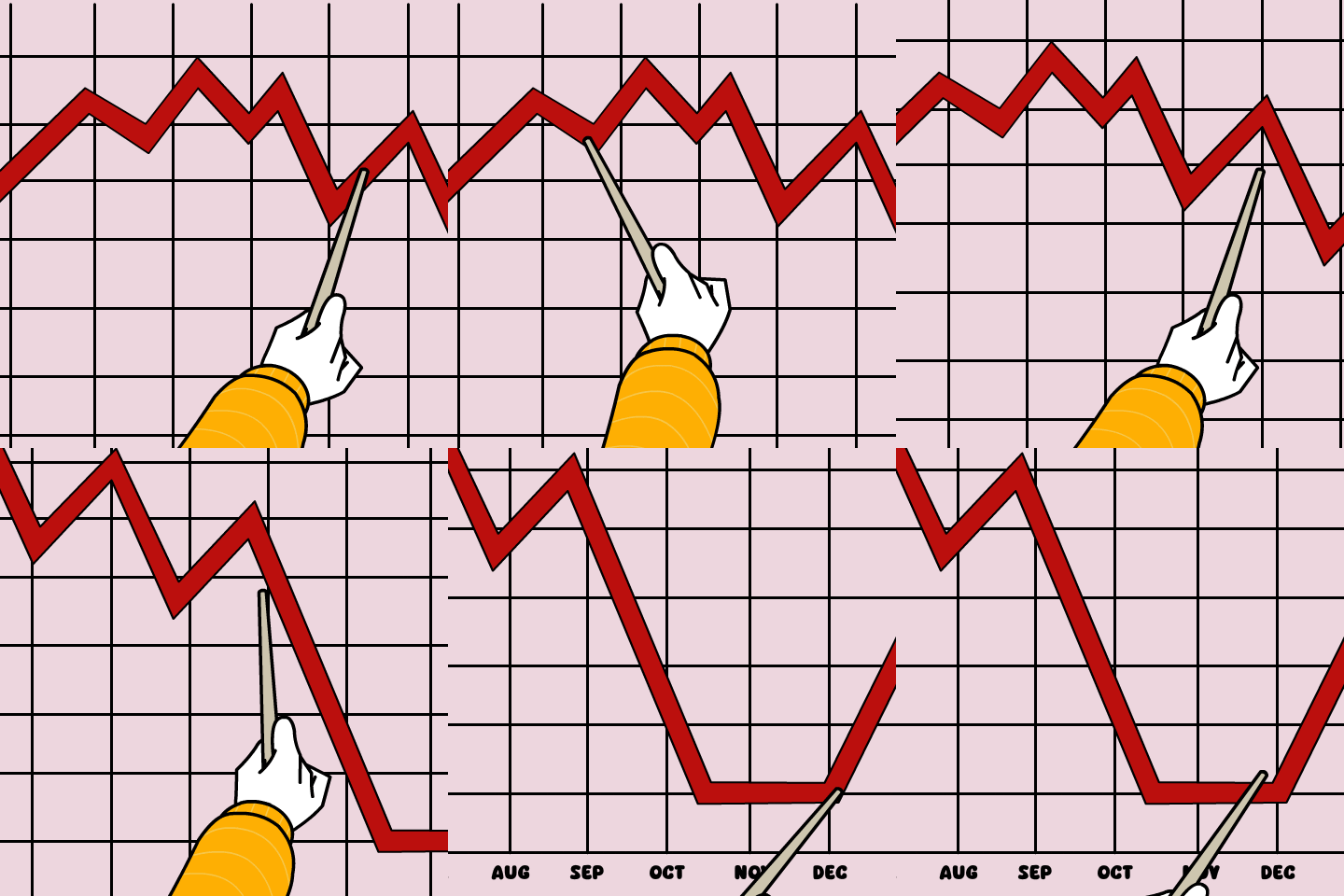
As the legendary investor Benjamin Graham said, “The market is a device for transferring money from the impatient to the patient.”
Patience and a long-term perspective are crucial for any DIY investor.
"The market is a device for transferring money from the impatient to the patient."
- Benjamin Graham Tweet
Famous Crashes, Remarkable Recoveries
Let’s take a stroll through memory lane and revisit some historical market crashes:
- The Great Depression (1929): A brutal crash that wiped out fortunes, but the market eventually quadrupled in the following decade. (Read More – https://www.investopedia.com/)
- Black Monday (1987): The Dow Jones Industrial Average plunged 22.6% in a single day. Scary, right? Yet, the market recovered within two years. (Read More – https://www.investopedia.com/)
- The Dot-Com Bubble Burst (2000): Tech stocks took a nosedive, but the market rebounded within five years. (Read More – https://www.investopedia.com/)
Do you think that was the end of the stock market? No, the stock market has survived all those crashes and has made so many millionaires. The stock market never dies and it comes back with vengeance and shows even more highs.
The Power of Perspective: Crash Could Make You Rich Sooner
Hear this secret which often gets overshadowed by the fear of the market crash: A market correction can be the best thing that one can utilize to become rich. Quality companies often become undervalued and stock prices are way cheaper. This creates an opportunity for savvy investors with long-term plans in mind. It’s like the stock market is on sale and if you buy in bulk you will have more to grow in the future.
Here is a wisdom from Warren Buffett: “Be fearful when others are greedy, and be greedy when others are fearful.” A market crash presents a chance to buy low and potentially sell high in the future.
"Be fearful when others are greedy, and be greedy when others are fearful."
- Warren Buffett Tweet
So, Will There Be a Crash in 2024? Nobody, I mean nobody can predict.
Predicting a market crash is an ineffective strategy. No one person’s perspective or analysis can tell you that the market is going to crash. The stock market is a complex web of factors that no single entity can influence or predict.
Don’t obsess over the fear, the unknown. What we must focus on is what we can control: our investment strategy and long-term mindset.
Strategies to utilize the downward trend of the Market.
If you like to manage your finances then here are some strategies which can help you use the market correction and emerge stronger:
- Diversification is Key: Don’t put all your eggs in one basket. Spread your investments across different asset classes (stocks, bonds, real estate) and sectors to minimize risk.
- The best way to do that is by investing in low-cost index funds.
- Invest Regularly: Implement a dollar-cost averaging strategy, where you invest a fixed amount of money at regular intervals regardless of the market’s performance. This helps you buy more shares when prices are low and fewer when they’re high.
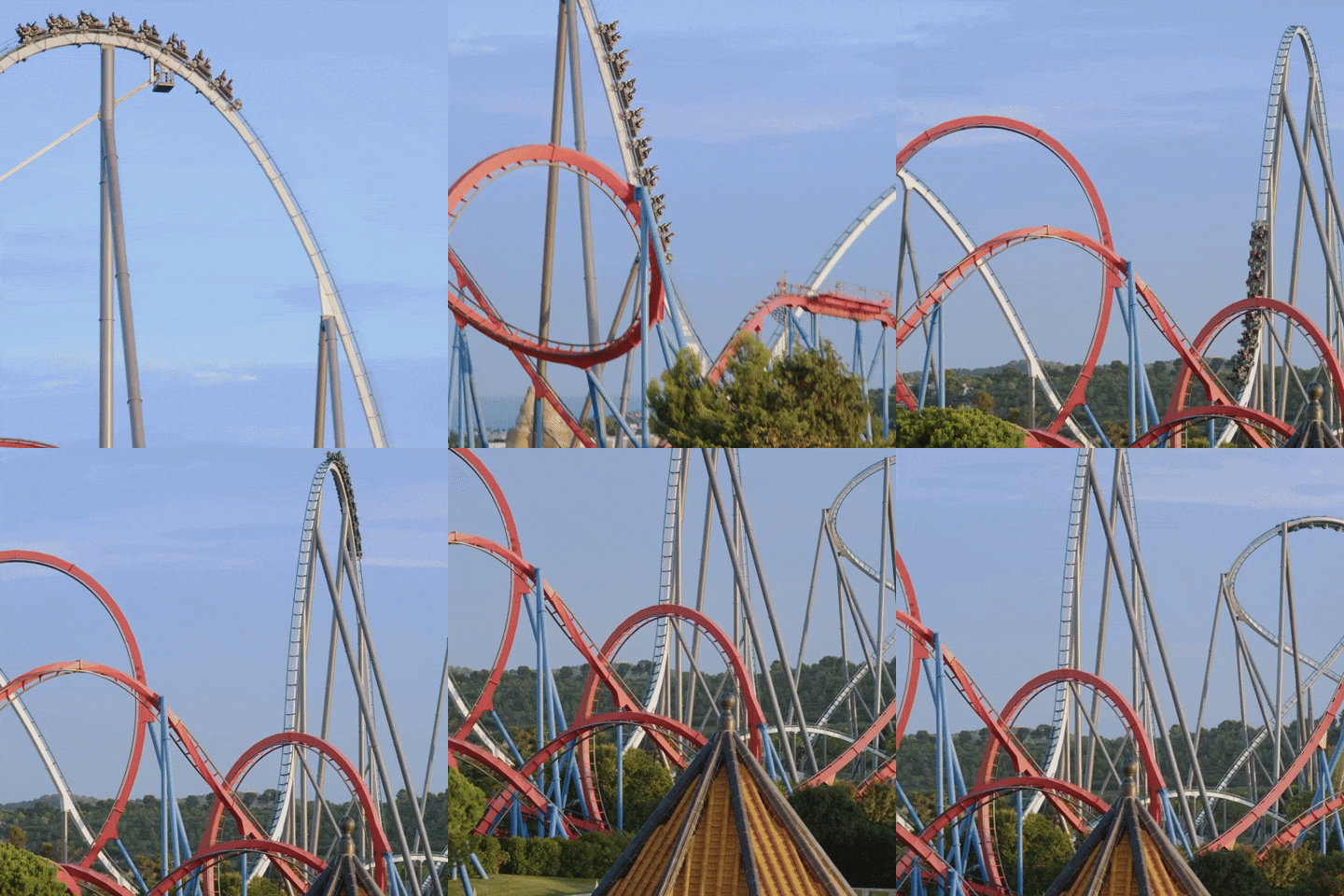
- Stay Calm and keep the patience: Never sell when the market is down. If you are panicked then better stay away from your investments. Let your money do its own thing. Emotional decisions rarely lead to sound investment choices. Stick to your investment plan and ride the rollercoaster ride.
- Focus on the Long Term: There is no shortcut to generating wealth. Remember, you’re not investing for next week or next month – you’re investing for your future. Keep your long-term goals in mind and don’t get sidetracked by short-term market fluctuations.
🙋 FAQs ⁉️
1. Is the S&P 500 overvalued now that the Shiller CAPE Ratio is near 40?
While a Shiller CAPE ratio near 40 is historically high, it doesn’t always signal an immediate crash. In 2026, high valuations are being supported by robust corporate earnings, which grew by nearly 13% in late 2025. Investors should focus on earnings quality rather than just price multiples.
2. How will the 2026 U.S. Midterm Elections affect market volatility?
Midterm election years are historically volatile as investors speculate on policy shifts regarding housing, healthcare, and tax funds. However, this volatility often creates “entry points” for long-term investors. Historically, markets tend to stabilize once the election results provide a clearer path for fiscal policy.
3. Is the AI rally of 2024–2025 a bubble about to burst in 2026?
The “AI bubble” debate centers on whether productivity gains match the high valuations. Unlike the 2000 Dot-Com crash, many 2026 AI leaders have strong cash flows and rising aggregate margins (currently around 13.9%). The risk is higher for “unprofitable” AI startups rather than the established hyperscalers.
4. What happens to my portfolio if oil prices stay above $110/barrel?
Sustained oil prices above $110 (driven by Middle East tensions) can trigger energy-driven inflation, which may lead the Fed to keep interest rates “higher for longer.” This typically pressures consumer-discretionary stocks but can benefit energy infrastructure and power producers.
5. Is a "soft landing" still possible with the April 2026 inflation spike?
The IMF projects global growth to slow to 3.1% in 2026 as headline inflation ticks up. While the “landing” is bumpier than expected due to geopolitical conflicts, a total crash is unlikely as long as the labor market remains in a “fragile equilibrium” and consumer spending stays resilient.
6. Should I stop Dollar-Cost Averaging (DCA) during this "Sticky Inflation" period?
No. DCA is designed for exactly this kind of environment. By investing a fixed amount regularly, you buy more shares when prices dip due to inflation fears and fewer when the market rallies. Historical data shows that “timing the market” is far less effective than “time in the market.”
Conclusion: Remember, You Are the driver of your Financial Journey
The stock market is unpredictable, but you can use its long-term upward trend for your benefit. Educate yourself, develop a solid investment strategy for your goals, and always look at your investments from a long-term perspective. Knowledge is power and once you understand the power the stock market crash holds then you can navigate this journey with confidence.
The stock market crash is not a bad thing if you have a long-term plan in mind rather it would be the best thing for your money to grow faster shortly. Do your research and be knowledgeable. Especially if you manage your own money. Don’t fall for the fear.
Take control!
The best way to predict the future is to create it."
– Richard Branson Tweet