🧑🎓7 Clever Ways to Save Money: Start saving more today
Saving money is an art and you would think that you have mastered it. Let’s dive into these seven clever ways to save money and see how many of these you have already mastered. You might know how to save, and these tips might look old but unless you act on them you won’t be able to save significantly. So, if you are to act now and start saving for your much needed wants and goals, read on.

Quick Summary: Master the Art of Saving
Stop wondering where your paycheck goes. This guide breaks down 7 clever, actionable strategies to transform your finances without feeling deprived. You’ll learn how to:
- Automate your growth by making savings “invisible.”
- Gamify everyday chores like grocery shopping to slash costs.
- Audit your digital life to eliminate “subscription bleed.”
- Master the 48-hour rule to permanently kill impulse spending.
- Adopt the DIY mindset and leverage “No” as a financial power tool.
Ready to build your passive prosperity? Let’s dive in.
1️⃣ The "Invisible Money" Trick: Money Automation
The most effective way of saving your money is by making it invisible. Like a hidden room in your home, start hiding your money by automating it into different categories like essentials, emergencies, debt payments, retirement, etc. Have a dedicated account for spending putting only the money that you need to spend a month by budgeting.
📌Benefits:
- Easy to set up.
- You do it only once and adjust periodically.
- Gets rid of the temptation to spend money if you don’t see it in just one account.

"Automating your savings is like giving a gift to your future self."
2️⃣ Turn your Grocery Shopping into a Game
Grocery shopping can be overwhelming but it’s one of those things nobody can skip. So why not make it fun? Here are a few of my tricks that have helped me to save on grocery shopping.
📌Tips:
- Make a list before you go shopping to avoid impulse purchases.
- Don’t go grocery shopping when I am hungry.
- Shop around, compare prices, and buy certain stuff where it’s cheaper.
- Look for sales, and coupons, and bring reusable bags.
- Shopping at night sometimes can help to get reduced prices.
- Use grocery shopping apps like Publix, Aldi, and Sam’s Club to earn points and save on your next purchases.

"A penny saved is a penny earned, especially at the grocery store.”
3️⃣ Time to Unsubscribe [can save you a bunch]
If you look at your statements and see any recurring subscriptions that you haven’t used in a while, then STOP and just end the subscription. These recurring costs can make a big hole in the long run. You would be surprised how much you can save.
📌How to Audit:
- Open your bank statements now. Literally! look for recurring payments.
- Cancel those subscriptions and you can always subscribe back if you truly are missing anything.

"Small streams make big rivers. Unsubscribe from unused subscriptions and watch your savings flow.”
4️⃣Control your impulse purchases: The 48-Hour Rule
You see an advertisement on social media and you think, your life will be so awesome if you buy that thing, you want it, you must have it. Next thing you know you have spent 100s of dollars on such impulse purchases and that shiny important thing occupies your garage and your mental space.
There is a well-known way to control impulse purchases. Apply a 48-hour rule on such non-essential purchases. Wait for 48 hours before you make that purchase, if you still remember what you were supposed to buy, and you must have it after 2 days then go for it.

"He who buys what he does not need, steals from himself."
- Swedish Proverb Tweet
5️⃣Why not DIY?
Learn something new that can save you money. I have been learning basic home repairs since we purchased the house and I am sure we have saved thousands doing it. To give an example, I learned how to wall mount a TV which costs around 100 to 200 dollars.
You can start with small projects and these DIYs will turn eventually into complex projects and save you a lot. You can learn anything and everything these days on YouTube.
📌Resources:
- YouTube tutorials
- Free community workshops

"He who buys what he does not need, steals from himself."
- Elon Musk Tweet
Ready to crunch your numbers?
6️⃣Reduce, Reuse, Recycle
We have one planet, one earth, and one life to live. Why not make it sustainable for all of us? What if you could save some money while doing it?
Tips:
- Take your shopping bags to grocery shopping to avoid bag charges and reduce plastic.
- Take your water bottle from home to the office.
- Sell your old stuff that you no longer need.
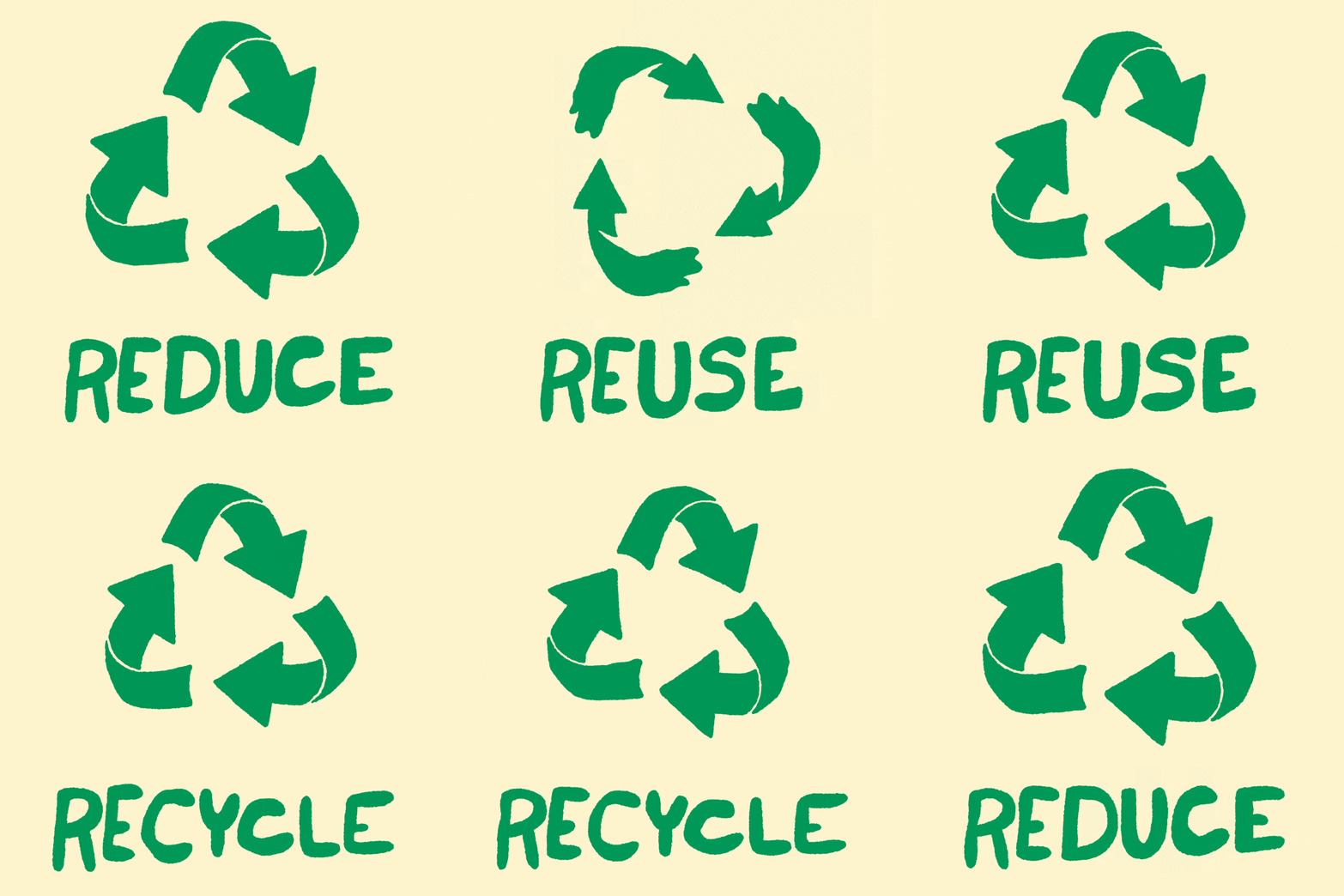
"Reduce, reuse, refill your wallet. Sustainable living goes easy on the planet and your pockets.”
7️⃣Start saying “NO”
How often do you say NO to yourself and others just to avoid the hard conversation? Say NO to unnecessary purchases, say no to Friday outings that you don’t like, and say no to outside food that you don’t enjoy. The list can go on. Saying no isn’t impolite it’s prioritizing your financial success above anything. It’s part of growing up.

"If you're not saying 'no' to most things, you're not focusing on the things that really matter."
- Naval Ravikant Tweet
FAQ ⁉️
1. How much should I ideally save every month?
While it varies by income, a popular benchmark is the 50/30/20 rule: 50% for needs, 30% for wants, and 20% for savings or debt repayment. You can use NerdWallet’s 50/30/20 Budget Calculator to see how your current spending stacks up
2. Where is the safest and most effective place to store my savings?
For short-term goals or emergency funds, a High-Yield Savings Account (HYSA) is often the best choice because it offers better interest rates than standard accounts while keeping your money accessible. The Consumer Financial Protection Bureau (CFPB) provides a great breakdown of different storage options and their risks.
3. Is "automating my savings" safe?
Yes! Most major banks offer secure automated transfer tools. Automation is considered a “best practice” by financial experts because it removes human error and the temptation to spend. You can learn more about building these habits through the Mass.gov Financial Literacy guide
4. How can I audit my subscriptions if I have too many to track?
Reviewing your bank and credit card statements is the most reliable “manual” way.However, if you want a professional strategy, Money Saving Expert offers a comprehensive “Money Makeover” guide that helps you identify and “painlessly” cut recurring bills
5. What is the difference between the 48-hour rule and the 30-day rule?
The 48-hour rule (mentioned in our post) is perfect for small, everyday impulse buys like clothes or gadgets. The 30-day rule is typically recommended for much larger purchases (like electronics or furniture) to ensure the “need” remains after the initial excitement fades.
🔁Conclusion: The Path to Passive Prosperity
Saving money is an art and hopefully, you understand why now. Saving money is a habit. Saving money isn’t about cutting back and living on beans. Saving money is about saying yes to financial success. Start applying these clever money-saving ideas and let me know how much money you save over time.
What's Next: take action today 🎯
- Analyze your habits: 5 Daily Financial Habits that will Certainly Make You Richer
- Cut your Expenses: Money-Saving Hacks: 4 Creative Ways to Cut Expenses
- 10 Money Saving Hacks: 10 Hacks to Save Time and Money: Proven Strategies You Need
- Need Inspiration to Save: Top 10 Quotes on Saving Money