👋Introduction
I get it. Every time you open a news app or scroll through LinkedIn, it feels like another “breaking news” alert about mass layoffs or corporate restructuring. While the Bureau of Labor Statistics confirms that economic fluctuations are normal, navigating a volatile job market survival requires more than just hope—it requires a plan.
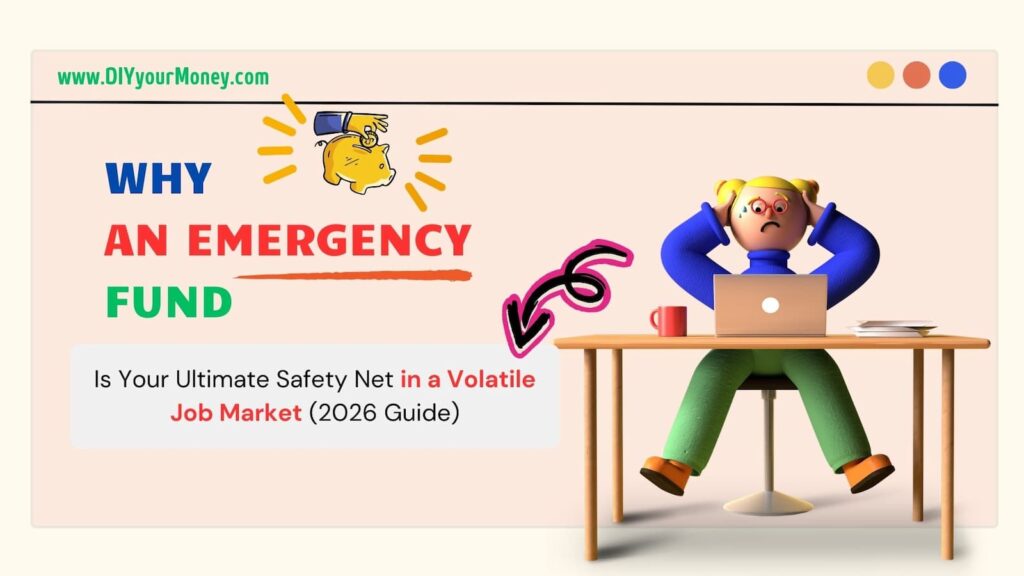
That “what if it’s me?” anxiety is real, and the importance of an emergency fund has never been clearer. The ultimate stress-reducer isn’t a new job lead—it’s building a financial safety net ready to launch. We’re not just talking about a rainy-day jar; we’re talking about layoff financial planning that secures at least six months of expenses.
"The time to repair the roof is when the sun is shining."
— John F. Kennedy Tweet
1️⃣ Think of Your Family: Financial Security is Emotional Security
If you are the sole earner in your house—or even if you’re part of a dual-income household—the weight of providing is heavy. When a layoff hits, the stress isn’t just about the missing paycheck; it’s about the emotional toll on those you love.
- Emotional Buffer: A 6-month cushion prevents the “panic” energy from trickling down to your kids or spouse.
- Stability: It ensures the mortgage is paid and the fridge is full without a single “emergency meeting” at the kitchen table.
- Clarity: When you aren’t worried about immediate survival, you can lead your family with a clear head.

"You don't just save for yourself. You save for the people you love."
— Anonymous Tweet
2️⃣Layoffs must NOT become another financial debt
Imagine not having money to cover your monthly expenses because you are living paycheck to paycheck. If you lose your job, your only option to cover expenses would be to get a credit card, a personal loan, or ask friends for money. Going into debt at the worst possible time—when you don’t have a job and don’t know when you will have another one—is a trap. With credit card rates hovering around 19.6% in 2026 (Bankrate), getting into debt instead of trying to build for your next adventure is not something you or your family wants. An emergency fund will make sure that you don’t fall into that rabbit hole and save you from the high stress that comes with financial insecurity (PMC).
- Avoid the Trap: Don’t pay 20% interest on groceries just because you didn’t have a savings buffer.
- Family Security: Debt hurts your family’s peace of mind; cash savings protect it.
- The Cash Firewall: A simple emergency fund stops you from needing to borrow money from friends or banks.

"Debt is like any other trap: easy enough to get into, but hard enough to get out of."
— Henry Wheeler Shaw Tweet
3️⃣ Save your future investments
Some people misunderstand their future investments—like 401(k)s and IRAs—viewing them as a safety net during a job loss, but relying on these accounts is poor financial planning. You would be hurting yourself twice: first, by paying a 10% early withdrawal penalty plus income taxes to the IRS, and second, by losing years of compound growth (IRS.gov). Even worse, if the market is down when you lose your job, you might be forced to sell your investments at a loss, permanently destroying wealth you worked hard to build. An emergency fund provides a cushion so you never have to steal from your future self to pay for today’s expenses.
- The Double Penalty: accessing retirement money early costs you a 10% fee plus immediate taxes, leaving you with much less than you withdrew.
- Locking in Losses: If you sell during a market dip to pay bills, you turn a temporary drop in value into a permanent loss.
- Time is Money: Money taken out today misses out on future growth; the biggest asset in investing is time in the market.

"The first rule of compounding: Never interrupt it unnecessarily."
— Charlie Munger Tweet
4️⃣ An Emergency Fund Buys You Leverage and Time
An emergency fund is your best bet when you are forced to look for a new job because it buys you the freedom to wait for the right opportunity. Instead of panicking and jumping at the first offer—which might come with lower pay or a bad title—you can afford to be patient. The average job search can take roughly five months (BLS), so having cash in the bank acts as leverage. It allows you to negotiate a better salary or hold out for a role that actually advances your career rather than taking a step backward just to pay the bills.
- Negotiation Power: If you don’t need the money immediately, you have the power to say “no” to lowball offers.
- Career Protection: Desperation often leads to taking bad jobs; savings allow you to wait for a promotion or a better fit.
- The Patience Premium: Time allows you to find a job that pays more, often covering the cost of the time you took off.

"Money’s greatest intrinsic value—and this can’t be overstated—is its ability to give you control over your time."
— Morgan Housel, author of The Psychology of Money Tweet
☝️Let’s Do the Math: Your "Sleep-at-Night" Number
How much do you actually need? Financial gurus love to argue over 3 months vs. 12 months. The truth? It depends on your “volatility.” If you’re a tenured teacher, 3 months might feel fine. If you’re a freelance type of a guy, you might want the full 12.
| Monthly Expenses | 3-Month Fund (Starter) | 6-Month Fund (Solid) | 12-Month Fund (Bulletproof) |
|---|---|---|---|
| $3,000 | $9,000 | $18,000 | $36,000 |
| $5,000 | $15,000 | $30,000 | $60,000 |
| $8,000 | $24,000 | $48,000 | $96,000 |
Pro-Tip: The “Insurance Paycheck” Analogy
You wouldn’t drive a car without insurance because the “what if” is too expensive. Living without an emergency fund is like driving through a hurricane without a seatbelt. Treat your monthly fund contribution like a mandatory “insurance premium” for your life.
🙋♀️⁉️ FAQ
Q: Should I pay off debt or build my fund first?
A: Get a $1,000–$2,000 “Starter Fund” first. This prevents “new” debt from happening while you’re paying off the “old” debt.
Q: Where should I keep this money?
A: Use a High-Yield Savings Account (HYSA). Look for institutions insured by the FDIC to ensure your principal is protected up to $250,000.
Q: Is 6 months enough for a freelancer?
A: If your income is “lumpy” or you live in a state like California or New York with high costs, we recommend aiming for 9-12 months. Check your local state labor office for specific unemployment benefit durations, as they vary wildly.
🎬 Conclusion
Think of your emergency fund as your own personal insurance policy. It protects your family, your future self, and your emotional well-being. If there were a way to make this a legal requirement for financial health, I’d be the first to sign the bill. But since it’s DIY, the responsibility—and the power—is in your hands.
Your Next Steps:
Check your bank balance right now. Calculate your “Must-Have” monthly expenses and see how many months you currently have covered. If it’s less than six, set up an automatic transfer of just $50 or $100 to a separate savings account today.
If you already have an emergency fund then you must ask these 3 questions before you spend it. Questions to ask before spending the emergency fund.
What about you? Has an emergency fund ever saved your skin during a layoff? Share your thoughts below!
"Do something today that your future self will thank you for."
— Sean Patrick Flanery Tweet