🤏5 Small Investments That Make Money: Your Financial Freedom Secrets
Scared of starting your investment journey? Do you think you need piles of money, a six-figure salary, or generational wealth? You would be surprised how easily you can start investing. You can start your as low as 20 dollars. Invest small and these small investments with smart investing strategies and the magic of compounding can help you climb the financial ladder. So what are these small investments that make money for you in the long term? The answer is index funds. Let’s learn what are index funds.
🚀 Quick Summary: Investing on Autopilot
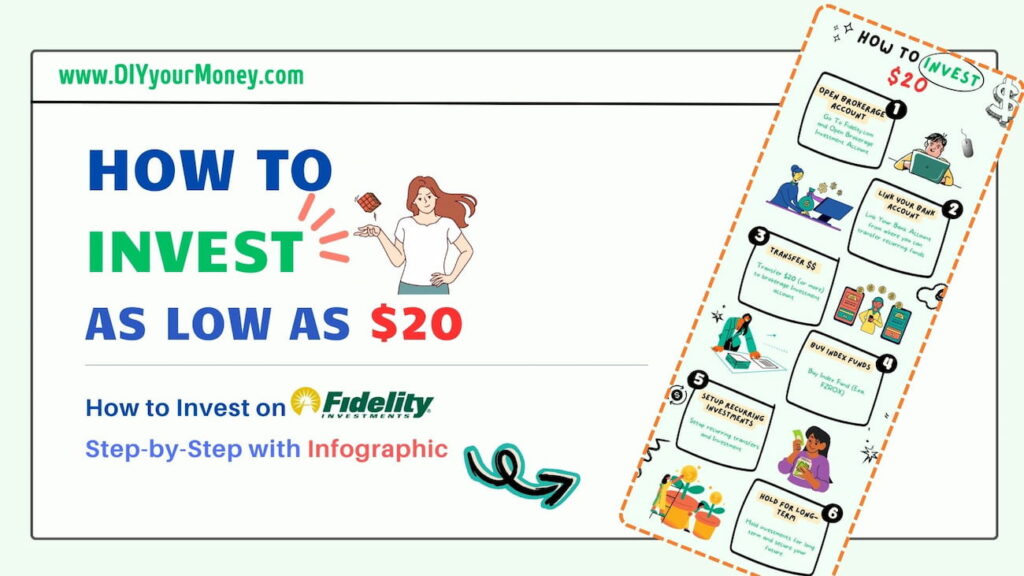
Think you need a fortune to start building wealth? Think again. This guide breaks down how you can jumpstart your financial future with as little as $20.
By leveraging index funds and the power of fractional shares, you can own pieces of the world’s biggest companies without the stress of “watching the charts.” Discover why a systematic, “lazy” approach to investing is often the most successful way to grow your money while you sleep.

🌳 My Personal Turning Point: From Skeptic to Systematic Investor
When I first started exploring the world of investing, I was incredibly skeptical. I had this vision that to be successful, I’d have to constantly track “big stocks,” study individual companies for hours, and master the complex ebbs and flows of market returns. Honestly? That fear almost kept me on the sidelines, watching my money sit still instead of growing.
I wish I had discovered index funds sooner.
They took away all that anxiety. As a Data Engineer, I appreciate systems that work without constant manual intervention. Index funds meant I didn’t have to be “that guy”—the one always glued to his phone, frantically checking charts to understand how the market is moving.
Instead, I started contributing whatever I could, whenever I could. Now, that “investment tree” is growing faster than ever. Are there seasons where the leaves fall and the growth seems to stall? Yes. But I’ve learned to stay steady. Just as I water a plant, I continue to put money into index funds, knowing that the magic of compounding is doing the heavy lifting in the background.
Want to see how I went from data to dollars? > Read my full journey here on my About Page.
❓What are Index Funds?
Index funds are just a collection of companies where your money is invested. Instead of trying to pick one better stock, your money is invested in 100s of companies. You choose the type of index fund that you would like to invest and that money gets spread across all the companies that the index fund holds. For example, an S&P 500 index fund would invest your money in the 500 largest companies that are publicly traded in the US. Let’s see why are those considered small investments in the world of investing.
"The most sensible equity investment for the great majority of investors is a low-cost index fund."
- Warren Buffett Tweet
Why are Index Funds "Small" Investments❓
- Low Minimums to Start: A good amount of index funds these days allow you to start as low as $20. And I am sure if you can spend 20 dollars on a meal then you can invest 20 dollars for your future meals too. These small investments have become accessible to most of us.
- Fractional Shares: Some investment platforms allow you to purchase fractional shares of an index fund. This means you don’t need to come up with enough money to buy a whole share (which can be expensive for high-performing funds).
- Automatic Investing: If you are investing then you must hold it for the long term to truly get the compounding magic work for you. Most banks have made it easy to automate your investments in these index funds on whatever schedule you are interested in.
✅Benefits of Starting Small with Index Funds
- Develops Habit and Discipline: Investing isn’t a one-time thing. You must form a long-term habit and discipline for your investments to grow bigger and fatter. Invest whatever you can and make sure you make it a habit.
- Reduces Risk: The fear of losing money is real and starting small and understanding your investments in index funds are invested in 100s of companies reduce the risk and fear of losing the money. Not all the companies are gonna go down together. If one goes down another will rise and your money will grow with that.
- Low Fees: Index funds are passively managed since your money is spread across multiple companies there is no active management required. Hence the low cost of management. This helps for your small investments because the majority of money is invested and not wasted on fees.
- Long-Term Growth: History speaks for itself and stock market history shows that even with occasional crashes your money is bound to grow. Your small investments in the long term will grow bigger as the market grows. Index funds will, more or less follow the same upward trend in the long-term.

"By periodically investing in low-cost index funds, the index fund investor captures the major gains of the American economy without blinking."
- Warren Buffett Tweet
5️⃣ Best Index Funds to Start Your Small Investments:
You won’t be able to build wealth by putting your money in a bank account. Inflation is going to eat the value of the current dollar. We must beat inflation and prepare for our future needs by investing our money. The compounding of money will help us have more money if we start sooner. Don’t rely on social security or your kids, you must secure your retirement by automating your investments.
- Vanguard S&P 500 ETF (VOO): Vanguards’ S&P 500 index fund tracks the S&P 500, with an expense ratio of just 0.03% is a still.
- Fidelity ZERO Large Cap Index Fund (FZROX): If you don’t want the fees at all then Fidelity’s S&P 500 tracker, promises an expense ratio of 0.00% (no fees!). My personal favorite.
- Schwab U.S. Broad Market Index ETF (SCHB): Schwab’s broad market provides even more diversification at the expense ratio of 0.03%.
- Vanguard Total Stock Market ETF (VTI): Tracks the entire US stock market, including large, mid, and small-cap companies, for comprehensive US market coverage with an expense ratio of 0.03%.
- Vanguard Total World Stock Market ETF (VT): For globally diversified exposure, this fund tracks stocks from developed and emerging markets, all with a low expense ratio of 0.07%.
"Owning the S&P 500 for the next 100 years clearly makes more sense than sprinkling your assets throughout a bunch of funds, especially where you pay high fees."
- Warren Buffett Tweet
🙋 Frequently Asked Questions (FAQs) ⁉️
1. Can I really start investing with only $20?
Yes. Many modern brokerages and apps have removed minimum deposit requirements. By using fractional shares, your $20 can buy a small piece of an expensive ETF or stock that might otherwise cost hundreds of dollars per share. Consistent small contributions are more important for long-term wealth than waiting to start with a large sum.
Start your investing journey small: how to invest ?
2. What is the difference between Vanguard VOO and Fidelity FZROX?
VOO (Vanguard S&P 500 ETF) tracks the 500 largest U.S. companies and has a tiny expense ratio of 0.03%. FZROX (Fidelity ZERO Total Market Index Fund) tracks the entire U.S. stock market (including small and mid-cap companies) and has a 0.00% expense ratio. While the blog post refers to FZROX as a “Large Cap” fund, it actually provides broader exposure than VOO by including the total market.
Supporting Article: The 10 Best Index Funds Offer Low Ratios and Strong Returns – Quartz
3. How do fractional shares help me diversify?
Fractional shares allow you to “slice” your investment across multiple assets. If you have $100, you can put $20 into five different index funds or stocks. Without fractional shares, you would be forced to buy one whole share, which might limit you to just one company or fund. This leads to enhanced diversification and lower overall portfolio risk.
Supporting Article: Fractional Shares Investing 101 – The Basics – AAA
4. Why are index funds considered "passive" investments?
Index funds don’t require a manager to hand-pick stocks. Instead, they automatically track a specific list (like the S&P 500). Because they aren’t actively managed, they have much lower fees, which means more of your money stays invested and grows over time.
Read why Index Funds are so popular: here
5. How long do I need to hold my investment to see results?
Index funds are designed for the long term. To truly see the “magic of compounding” mentioned in the post, most experts recommend a horizon of at least 7 to 10 years. This helps you ride out short-term market crashes and benefit from the historical upward trend of the stock market.
Supporting Article: How Can Stock Investors Receive Compounding Returns? – SoFi
6. Do I need to watch the stock market daily?
No. One of the biggest myths is that you need to ‘day trade’ or watch charts to make money. By using index funds, you are betting on the entire market’s growth over years, not hours. This ‘set it and forget it’ approach is actually more effective for most investors than active trading.”
Supporting Article: Passive vs. Active Investing: Which Is Better? – Forbes
🔁Conclusion: The Path to Passive Prosperity
Financial freedom and security must be everyone’s top priority. Investing is a tool that achieves that. Investing does sound intimidating but starting small can help anyone start. Once you take that first step and slowly understand the rules, benefits, risks, and long-term gains, you will remain with only one regret, why didn’t you start early?
"The beauty of investing in index funds is that you’re buying a piece of the entire market’s potential; it’s like casting a wide net to catch as many opportunities as possible."
- a seasoned investor. Tweet
Start small, and make a move. Get over the fear and your financial success awaits.
Ready to crunch your numbers?
What's Next: take action today 🎯
Remember: A small step on the right path will take you to your destination. The small investments in these index funds will grow eventually and have the potential to take you to your financial summit. Over time index funds have proven to grow with the market and are the best advisable investment tools for anyone who is starting or is already investing money.